

Recently, Shenzhen Special Zone Daily published an on-site coverage titled A Visit to Shenzhen’s "Super Brain": The In-depth Secrets Behind Lingsheng Supercomputer Ranking First Globally. The report pointed out that the fully domestic all-stack capability of the Lingsheng Supercomputer is remarkable. From processors and ultra-large-scale networking to 100% full liquid-cooled computing cabinets, every core link is independently mastered by China.
As the general design contractor of the project, China IPPR has formed a closed-loop design system covering core processes including centralized liquid cooling systems and on-site architectural implementation, offering a pioneering solution for the 3.0 era of supercomputing buildings.
The Evolution of Supercomputing Buildings: From Version 1.0 to 3.0
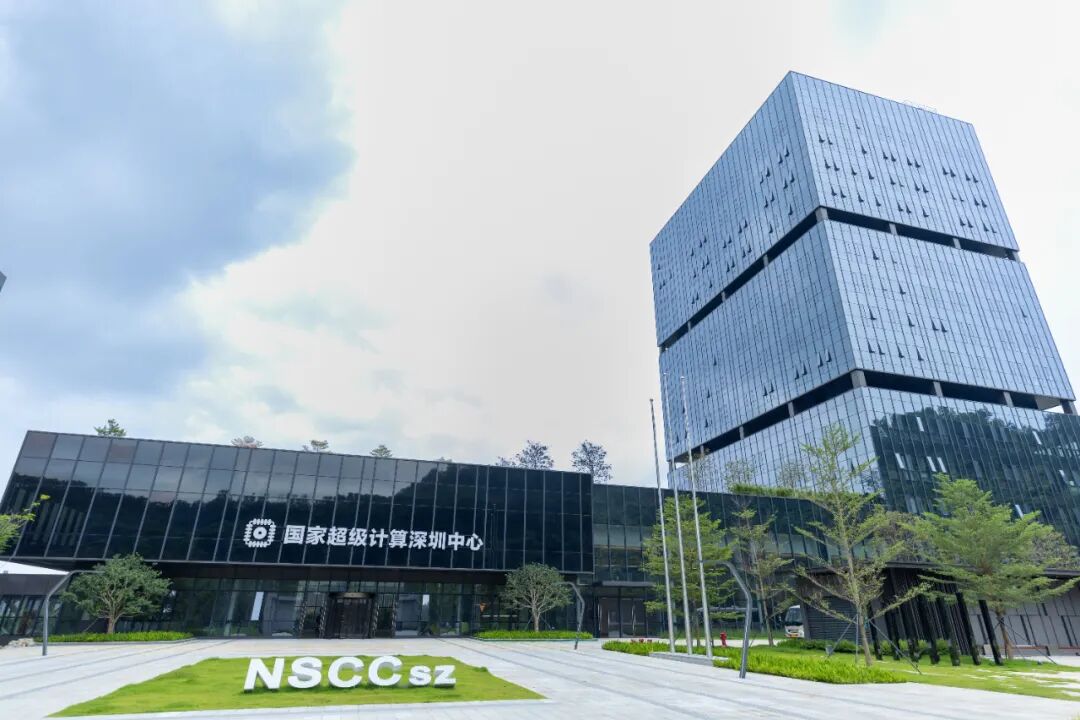
Reviewing the development of domestic supercomputing centers, the 1.0 era regarded supercomputing buildings merely as containers for equipment, and the 2.0 era focused on the maximization of operational efficiency. The Phase II project of the National Supercomputing Center in Shenzhen stands as a typical masterpiece of the 3.0 era of supercomputing architecture, which highlights the integration of technology, nature and humanity.
The site features a natural height difference of 25 meters between its east and west sides. To reduce the visual pressure of the supercomputing facility on the urban interface, the design places the short axis of the computer room towards the city, cutting the street-facing facade by 20 percent.
The terrain height difference is fully utilized to realize vertical traffic separation. The lower western side is arranged as the entrance for researchers, while the higher eastern side connects to the second floor of the computer room as the freight entrance. This allows large equipment to be transported horizontally without hauling along steep slopes.
Adopting the design philosophy of decentralizing mass layout and adapting to the terrain, the project not only resolves site constraints, but also closely integrates the building with the natural environment, realizing the symbiosis of high-tech facilities and natural landscapes.
Photovoltaic Curtain Wall: The Integration of Practicality and Aesthetics
The photovoltaic glass curtain wall system on the building envelope is the most recognizable design of the National Supercomputing Center in Shenzhen (Phase II).
Inspired by the immense computing power of the supercomputing center, which evokes the energy core at the heart of the Milky Way, the design team put forward the design concept of "Core of Energy, Glow of Nebula". In daytime, the curtain wall mirrors the surrounding mountains and sea of clouds, taking on different visual effects with the shift of seasons. After dark, indoor light diffuses through the gaps between triangular panels and shapes distinctive light and shadow scenes.
This curtain wall is by no means merely ornamental. The dark cadmium telluride photovoltaic glass lends the building an air of mystery while boasting excellent photoelectric conversion performance. Its efficiency loss under high temperatures is only half that of monocrystalline silicon, making it perfectly suited to Shenzhen’s climate. The team fabricated the material into a modular triangular curtain wall system; folded panels at diverse angles optimize solar irradiation and raise power generation efficiency. Spanning 6,600 square meters, the photovoltaic curtain wall generates about 430,000 kWh of electricity each year, covering part of the building’s daily power consumption.
The World’s Largest Centralized Liquid Cooling System: A Self-Developed Cooling Solution Built from Scratch
The peak power of a single cabinet in the Phase II of National Supercomputing Center in Shenzhen reaches 530 kilowatts, more than five times that of conventional liquid-cooled cabinets. Commercially available standard CDU products only support a maximum cooling capacity of 1,500 kilowatts. Given the total cooling demand of the project’s liquid cooling system, a massive number of CDU units would have been required if adopting off-the-shelf products, which would compromise the integrity of the computer room process layout, hinder centralized regulation of the liquid cooling system and delay rapid response to cooling load changes. Starting from scratch, the China IPPR team independently completed the full design and integration of the entire CDU system.
With a total cooling capacity of 57.9 megawatts, equivalent to the summer cooling demand of 6,000 to 7,000 households, this system is the world’s largest centralized liquid cooling system already constructed and put into operation. The total length of secondary-side pipelines exceeds 3 kilometers, the net weight of the whole system stands at 244 tons, and the main ring pipeline boasts a diameter of 1.2 meters, forming a cooling pipe network of industrial scale.
Challenges of High-Density Power Supply: Power Support of 170,000 kVA
The Phase II project of the National Supercomputing Center in Shenzhen features a total installed capacity of approximately 170,000 kVA, requiring access to 14 municipal external power lines. Such a large-scale power supply configuration is rare among domestic supercomputing facilities.
In terms of internal power architecture, the project adopts a high-voltage direct current (HVDC) solution to reduce AC-DC conversion losses. Each HVDC cabinet is equipped with redundant modules to ensure that single-module failures will not affect overall system operation.
The project faces more severe external challenges. Located in a coastal area, Shenzhen is vulnerable to instantaneous grid flicker and interruption caused by typhoons. To address this risk, the design team demonstrated multiple energy reserve solutions including supercapacitor energy storage and flywheel energy storage systems, and finally adopted high-rate lead-acid batteries with a 5-minute backup duration. This establishes a complete uninterrupted power supply system to guarantee stable operation even under extreme weather conditions.
From Phase I to Phase II of the National Supercomputing Center in Shenzhen, China IPPR has sustained the owner’s full trust with its professional expertise and achieved iterative upgrading of the design methodology for 3.0-era supercomputing buildings. By delivering design certainty, the project responds to the uncertainties of the computing era, marking a solid milestone on China’s national computing power layou





